

Why People Search for Laminated Benchtops
Many homeowners and business owners choose laminated benchtops because they’re affordable and offer plenty of style options. Remica does supply laminated benchtops, but we often guide customers toward compact laminate. It gives the same modern look while adding extra strength against water, scratches, and heat—making it a better choice for spaces that see heavy use.
Laminated Benchtops vs Compact Laminate: Key Features Compared

Laminated Benchtops – Why People Search for Them
People often choose laminated benchtops because they’re affordable and look good. They come in wood grains, stone patterns, and plain finishes, so it’s easy to find a style that fits a kitchen, bathroom, or office. They’re light, simple to install, and a quick way to freshen up a space.
The drawback is how they hold up over time. A laminated benchtop has a decorative sheet glued onto MDF or particleboard. If that thin layer chips or water seeps into the joints, the board underneath can swell. Once that happens, the surface doesn’t sit flat, and the benchtop usually needs replacing. In high-use or damp areas, this happens sooner than most people expect.
Why Compact Laminate Is the Smarter Choice
Compact laminate isn’t built the same way as a standard laminated benchtop. Instead of a thin decorative sheet glued to particleboard, the whole panel is pressed from layers of paper and resin under high pressure. The result is a solid, heavy-duty sheet that’s strong all the way through.
That construction makes a real difference in daily use.
- Water doesn’t get in – the edges don’t swell, even in bathrooms or outdoor areas.
- Scratches don’t show up as easily – it keeps its finish in busy kitchens or workspaces.
- Heat isn’t a problem – hot pots or direct sunlight won’t cause bubbling or peeling.
In short, you still get the clean, modern look people want from laminated benchtops, but with the toughness to actually handle years of wear. For households, cafés, compact laminate offers peace of mind that a standard laminated top just can’t match.
Maintenance & Care Tips

Laminated Benchtops
A laminated benchtop can look great at first, but it needs gentle care. Every day, cleaning should be done with a damp cloth and mild detergent. Harsh chemicals, steel wool, or scrubbing pads will scratch the thin surface. The bigger risk comes from moisture—if water gets into the joint or edges, the core can swell and the surface may start to peel. Even a small spill, like juice or coffee left to sit, can cause lasting damage. This is why laminated benchtops often don’t last as long in kitchens or bathrooms, where moisture is common.
Compact Laminate
Compact laminate is simple to look after. Because it’s solid all the way through, spills don’t seep in and a quick wipe with soapy water is usually enough. It won’t peel or bubble in damp spots, and it holds up against scratches in busy kitchens, cafés, or offices—making it a low-maintenance option that lasts.
Product Applications & Scenes
Kitchens
Laminated benchtops are common in kitchens because they’re affordable and look good, but steam, spills, and hot pans often wear them down quickly. Compact laminate is built to handle those conditions, staying smooth and damage-free even after years of everyday cooking.
Bathrooms
Moisture is the biggest challenge for laminated benchtops in bathrooms. If water gets into the edges, swelling and peeling follow. Compact laminate, on the other hand, is fully waterproof. From vanities to shelving, it performs well in humid environments and doesn’t lose its shape or finish.
Workstations and Offices
Laminated benchtops can work as desks or counters, but in busy offices they often wear out fast. Compact laminate is a better fit—it can be CNC-cut to exact sizes, giving sturdy work surfaces and partitions that hold up to daily use.
Hospitality and Retail
In cafés, restaurants, and shops, surfaces see constant traffic. Laminated benchtops tend to scratch or stain under that pressure, while compact laminate stays tougher, easier to clean, and presentable for customers day after day.
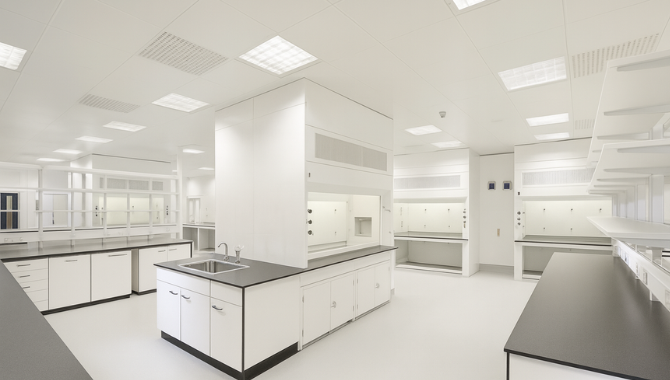
How Installation Differs Between Laminated Benchtops and Compact Laminate
When it comes to installing surfaces, the method often depends on the material.
- With laminated benchtops, installers usually spend extra time sealing every edge and join. This is because the top layer is only decorative, and the core underneath is vulnerable to water. Even small gaps can lead to swelling or peeling later on.
- With compact laminate, the process is simpler. The panels are dense and solid throughout, so they don’t need the same level of sealing. They can be cut to size with CNC machines, which gives a clean, accurate fit for benchtops, partitions, or worktops. Once installed, the joins are neat, and the material stays stable for years.
The main difference is peace of mind. Laminated benchtops look good but need more maintenance after installation. Compact laminate costs more upfront, but its solid build means fewer headaches and a finish that lasts in both homes and commercial projects.
Remica: Beyond Standard Laminates
Remica is a trusted manufacturer of advanced surface solutions, producing compact laminate, HPL-SPC flooring, MgO panels, and others for a wide range of projects. With a strong manufacturing base and international supply network, we combine durability with stylish finishes that stand up to everyday use.
Our focus has always been on creating materials that go further than standard laminated benchtops—offering products designed to perform in real-world conditions without losing their visual appeal. From residential kitchens to commercial spaces, Remica delivers surfaces that look modern, last longer, and provide genuine long-term value.
Quick Answers to Help You Decide
Do you sell laminated benchtops?
Yes, we do. Laminated benchtops are affordable and popular, but we often recommend compact laminate because it performs better in wet or high-use areas.
Is compact laminate more expensive?
Yes, the upfront price is higher, but it lasts much longer than laminated benchtops and requires far less maintenance.
Can I order custom sizes?
Yes. Every project is different, which is why we offer compact laminate in custom sizes. Our CNC cutting process makes sure the fit is accurate and clean.
Where is compact laminate best used?
It’s ideal for kitchens, bathrooms, cafés, offices, and outdoor areas where surfaces need to withstand constant moisture and wear.

The Smarter Choice for Lasting Surfaces
Laminated benchtops do the job for a while, but they’re not built for heavy use. Compact laminate is tougher — it won’t swell, scratch, or buckle with heat. If you want a benchtop that stays in shape after years of daily use, compact laminate is the safer bet.


 English
  Russian
  Spanish
  Arabic
  German
  Chinese
  Thai
Thai  Vietnamese
  Italian
  French
  Portuguese
  Turkish
  Korean